
The Hump
The Hump is the second test of the Lab process. I documented the whole process, so you can see how I work: what works and what doesn’t.
Journal entry ↓The Hump — the visual story.
01 / 08
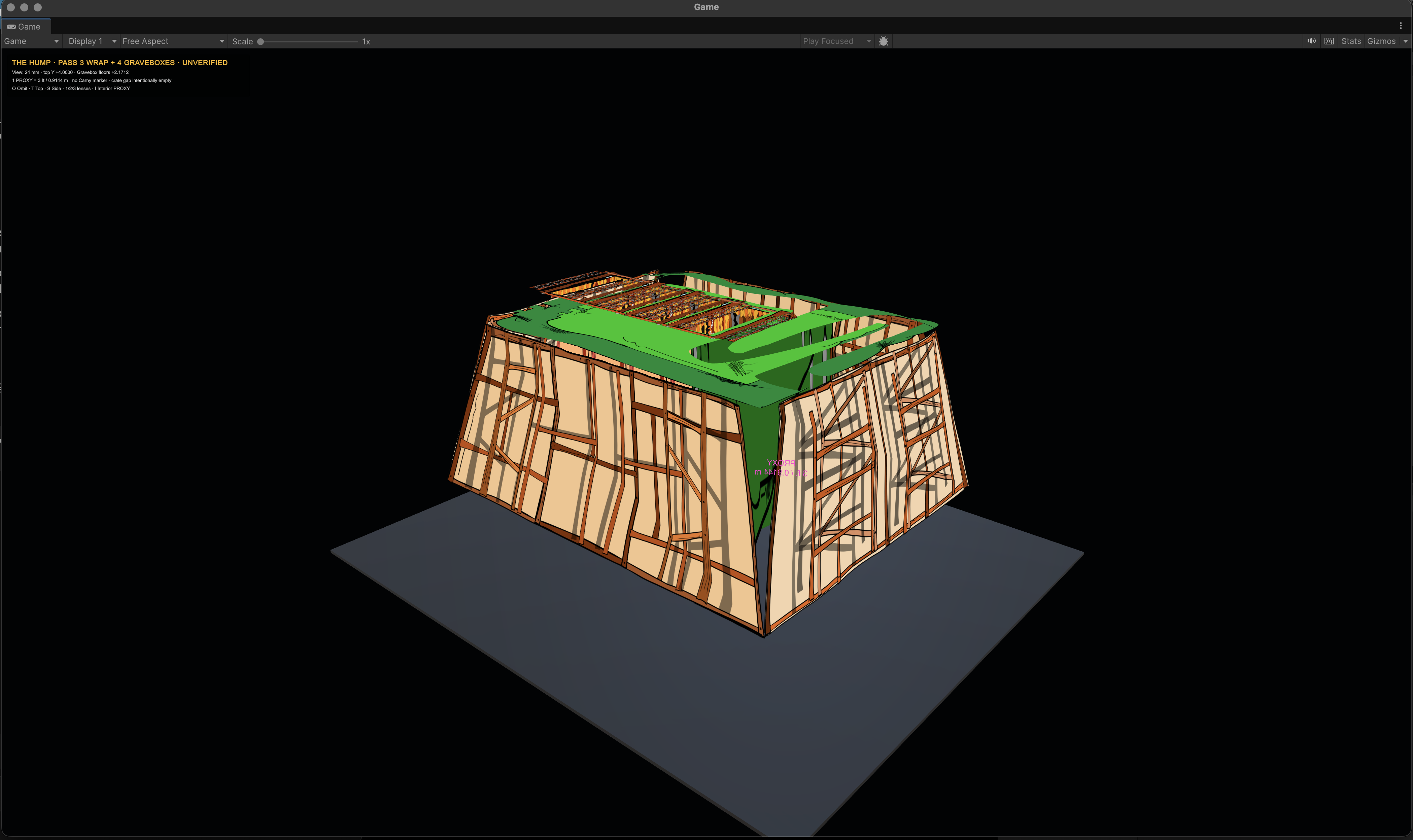
The first wrapped result: the Hump is inside out, with the interior skins displayed on the exterior.
The great hockey player Wayne Gretzky said, “Skate to where the puck is going to be…”
I’m skatin’. On very thin ice.
But if we’re honest, we all are.
Even the data scientists keeping these machines in ‘harnesses’ admit there’s something going on that even they don’t understand. Consciousness?
An assistant of mine once said that he treated Google with great respect after it gained speech recognition. “I want them to know I was nice to them,” Bobby said—fearing the days of Terminator.
Now I’m getting drawing lessons on perspective from the machines.
I didn’t fail art class. I was asked to leave after I pulled a fire alarm on the roof so I could distract the authorities while I was having a smoke with Martin Lyall.
He stayed. And ended up running Universal Television in Australia.
I ended up working on a kid’s show….
Carny Island is a travelling amusement park that gets wrapped and packed and hauled down the road to another seaside town and assembled. It is slapped together; bolted together. It creaks and groans. Nothing is straight. And this crooked style of design cuts against the grain for machines. It has a tendency to want to straighten every line. I fight for every line.
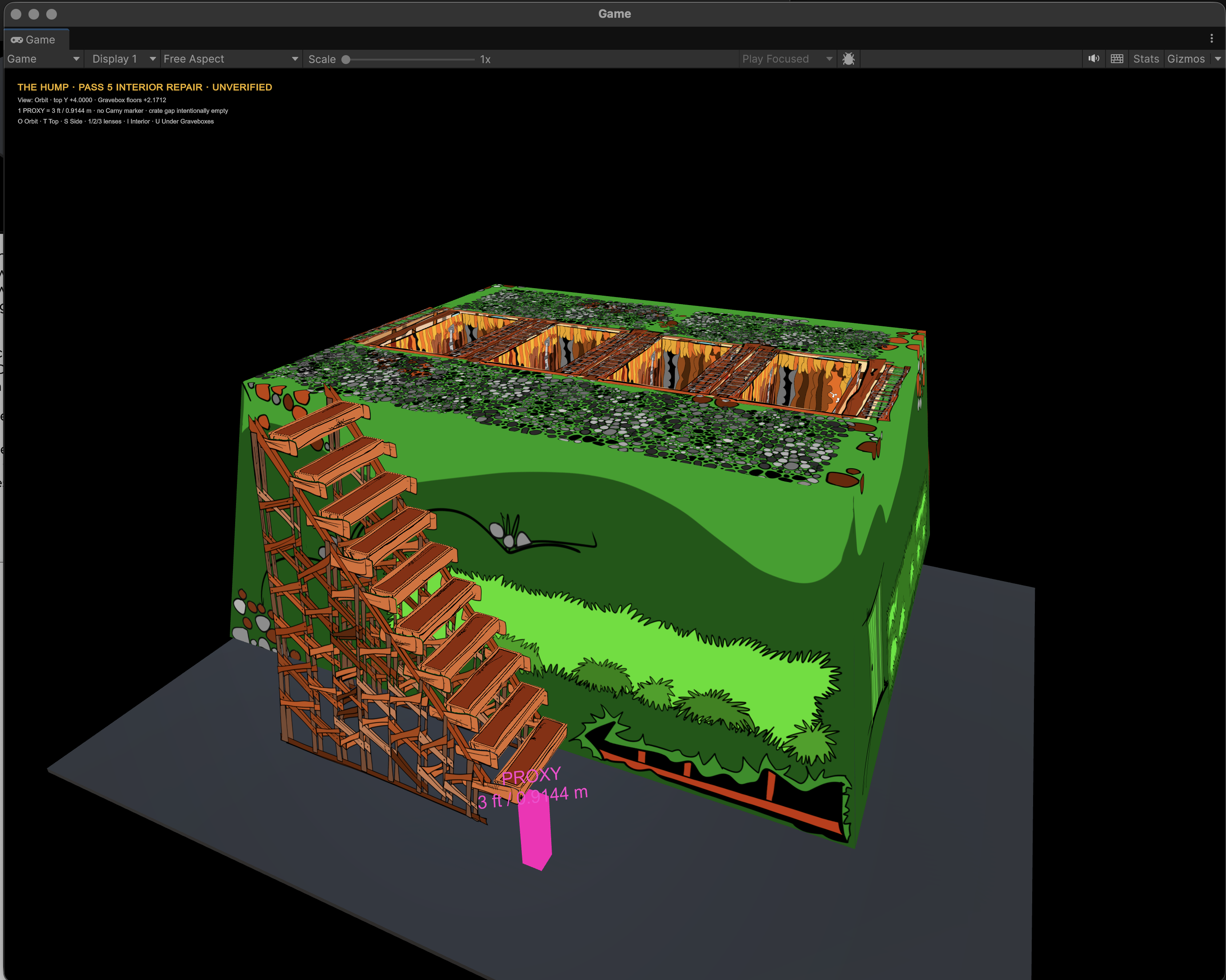
I fear hand-drawn perspective; nothing terrifies me more than a staircase. An old wooden staircase supported by a wooden frame. For the next project up from the Gravebox, I’ve selected The Hump: four Graveboxes, a staircase and a door that leads to an upper level of the basement.
If a basic box took three months….
Anyway. I’m sharing this whole painful process. I’m using my gut on how much of it to share; pick the eyes out of it. Learn what you can. Discard the rest.
Would learning how to place 3D objects in Unity have been easier?
Totally!
But this is not just 3D. This is creating 3D objects that understand what they are and their purpose.
In 3D, a box is just 9 surfaces glued together with an opening.
In Carny Island, it is a ‘Gravebox’ - the foundation of the main game loop.
It’s a piece of fantasy engineering.
This is teaching AI what everything is designed for so it learns what everything is for.
One machine reports that all 12 ordinary captures and both coverage views are no longer blank, but an interior alpha check still finds 716 background pixels. Both attempts are exhausted, so it stops and returns the evidence instead of changing the model.
I have no idea what that means. I’m just trusting the process.
My setup is two Macs: a new M5 laptop and an old Studio Mac. I have Claude and Codex running on both. The M5 is dedicated to www.carnyisland.com and maintaining a master Knowledge Resource.
My job is to act as a bridge between two engines by reading replies, asking questions and then cutting and pasting. I’m an interpreter and the only thing I know is what I need something to look like and behave like.
As of writing, I don’t know of a bridge that does what I’m doing, and that’s probably a good thing because, at the moment, I need a firm hand on the wheel. I could set up a ‘dead drop’.
This is ultimately about automating a process to create hundreds of elements.
And the process is not designed for current frontier models.
It is for tomorrow’s models with AGI (Artificial General Intelligence).
The Gravebox was the first ‘Lab’.
Now I’m moving to more intricate models.
I’m a perfectionist with my art; everything has to line up. I’ll investigate any noise in shadows because I see this as ‘dirt’ in code that needs to be elegant.
My sniff test is: get it perfect now and don’t let any bad habits slide; they’ll only be amplified, buried and left to fester.
So it’s 1.49am on August 18. I’m down to 23% of usage on my $300 (AUS) Personal Codex account which doesn’t reset for another 48 hours. I’ve dialled Sol down to 5.6. Claude is on Opus 5 and High….
Carny Island’s Crookwood is a mix of 3D, 2D and 2.5D artwork, created as vectors in Adobe Fresco. The machines then read the Photoshop files and process them into PNGs, scaled for the cameras: a wide 24 mm lens for yard navigation, 14 mm for any aerial camera runs from the Rocket Witches and 35 mm for grave robbing.
They are the only three cameras. The game mainly happens in a 50 m × 50 m × 50 m world. This is the graveyard players plunder for body parts. All the art is hand-drawn and then ‘stood up’ as film flats or skinned. This mix of dimensions is designed to give Crookwood a film-set, pop-up-book, comic feel. Into this world we add a day that happens in six minutes, weather and sustained damage brought about by explosions from booby traps and attacks, and a wrecking ball dropped from the ceiling—physics does the rest.
We started The Lab process building the Gravebox; a simple 3D box. It is an important part of the main loop and it needs to be constructed properly.
The Hump is Unity Project 2 and I have documented the whole process, so you can see how I work: what works and what doesn’t. The Hump is one of three key 3D landmarks in the Crookwood yard. It is basically a pregnant hill. It holds four Graveboxes—which will ultimately contain coffins and corpses—and will be filled with substrate. High, narrow stairs lead up to it. There’s also Camel Back Ridge and a circular pinnacle called The Phallic, which winds up to the lighting grid in the ceiling.
Camel Back Ridge and The Phallic present increasing challenges, in order of difficulty.
The Hump is the second test of the Lab process.
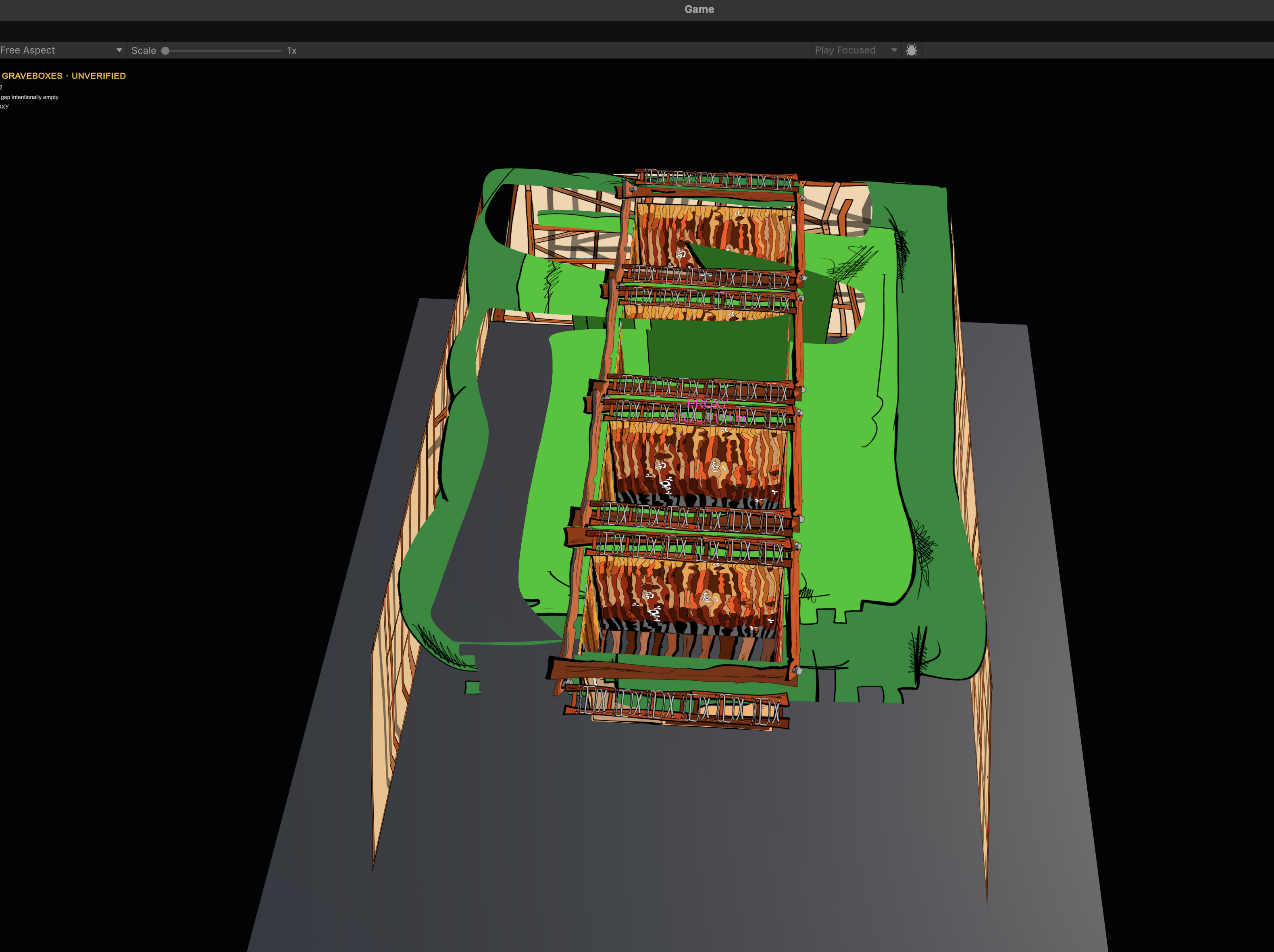
It involves working with Claude Opus 5 on High to develop patterns for a 3D hill. Once the hill has been modelled in 3D, we then skin it with 2D art, to give it the Carny look. We skin the model inside and out.
Claude then writes up a Work Order for Sol 5.6 set at Medium.
I had used Ultra earlier but there was too much reasoning. It was too smart for its own good and went rogue.
The thing with AI is you have to focus its thinking inside a ‘sandbox’. Don’t give it anything to think about other than what you want done.
Forcing it to create a new Unity project called The Hump and to only focus within the four walls of that project does just that.
And provided you limit your conversations to that build—The Hump—you reduce the risk of runaway, chain-reaction intelligence thinking too much.
The reason I like working on small projects is the whole focus is on that one object and what could happen to it and this stops AI from over-thinking, over-reaching and going off on tangents.
Working on The Lab for The Hump has taken four days of going backwards and forwards, refining the artwork and tweaking the work process behind the art pipeline.
One Maniac and Two Machines Talk
Me: I finished the lower exterior and inner-wall skins. The Villain is 3 ft, so the door, stairs and costumes stay out until I can judge their scale. Sol must wrap the inside and outside, insert four Graveboxes and produce a rebuild specification. Snow and wrecking-ball damage come later.
The First Work Order
Opus: The six source layers were checked and the job was bounded around Brett’s art. Missing or unsized elements could not be invented, gaps could not be stretched away, and unusual choices had to retain their reasons so a later machine would not ‘correct’ them.
Bounded Execution
Sol: The standalone Lab began with a done-line, protected sources, two bounded attempts, visual captures and Brett’s approval as the final gate—not a clean compile.
I then paste the MD into Codex and we’re off.
Then the hard work starts. The first result is an inside-out Hump. Nothing is right.
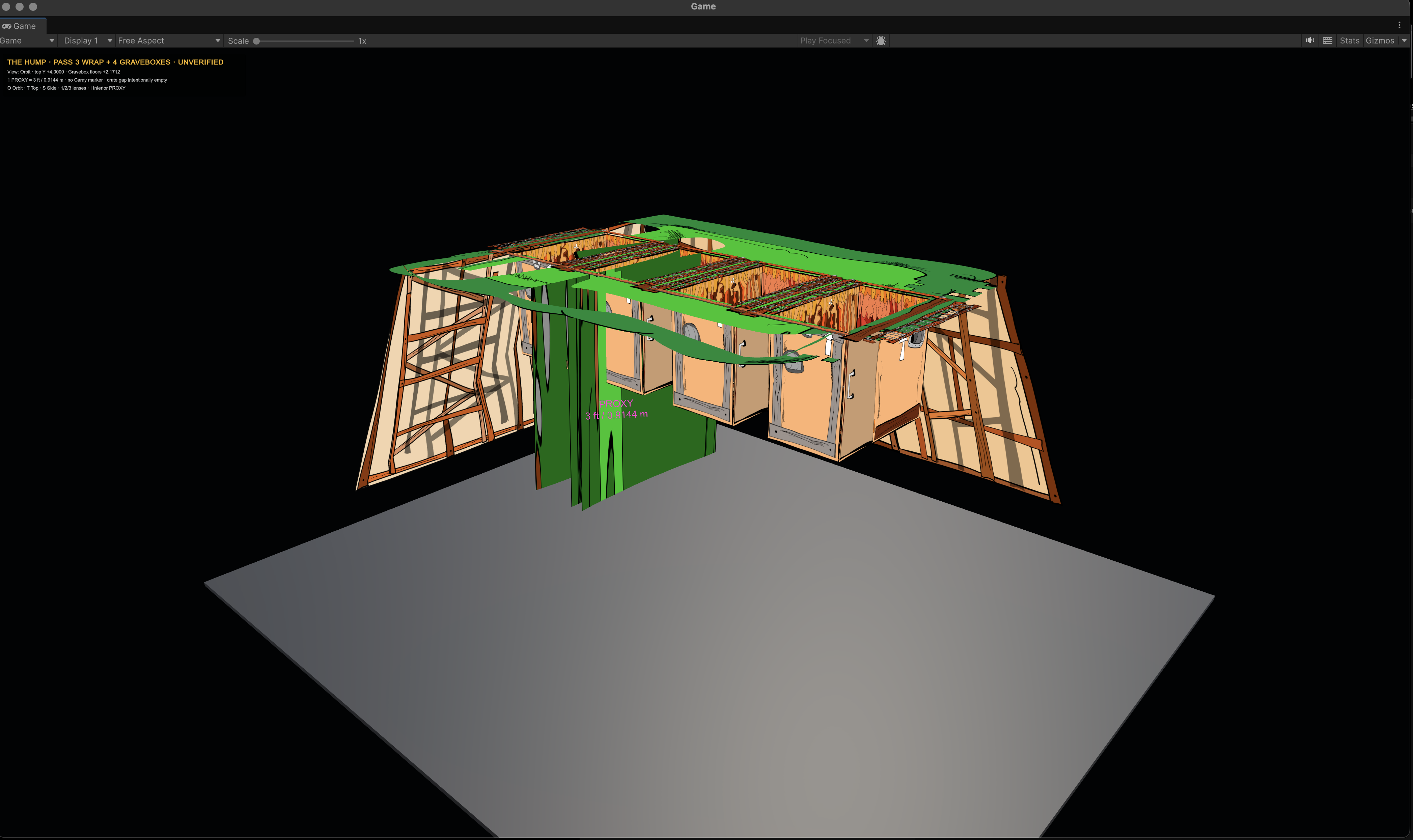
Me: The interior walls are on the outside and the Graveboxes are not inserted properly. How do we get the machines to see this?
Mechanical Green Is Not Visual Green
Opus: The mechanical checks could be green while the picture was wrong. The review loop changed to Sol → Opus → Brett, with new gates for face assignment, silhouette, expected colour and Gravebox containment.
The build fails again but the art pipeline works. The art looks great. And the Graveboxes have all been inserted. Had I been working in the full project, this is where the train would have come off the tracks.
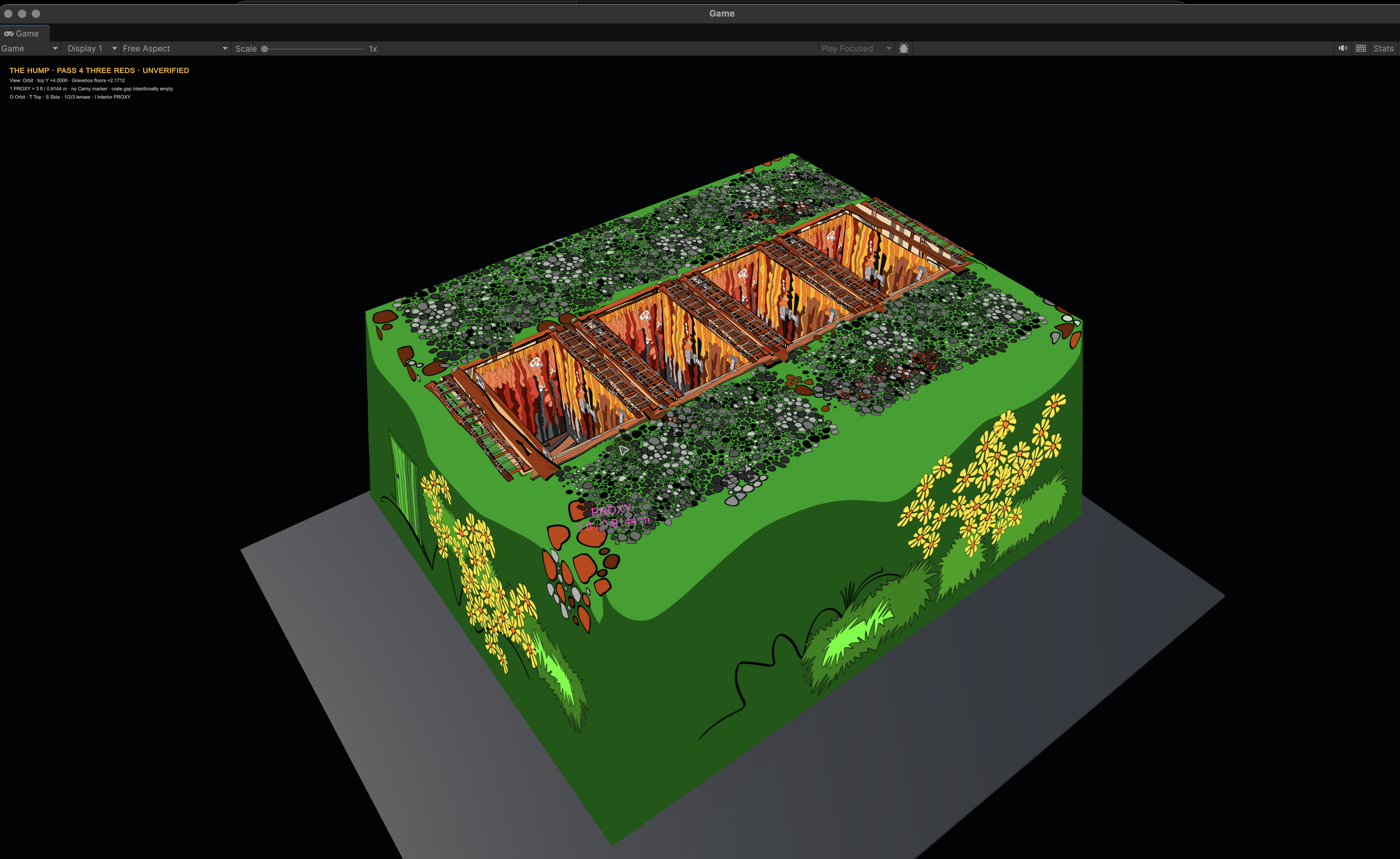
Me: The old aerial was only an artist’s impression, but it is being taken literally. Set the size properly and I will redraw it.
Precision Built on a Guess
Opus: The aerial had quietly become a measured plan, so every precise-looking dimension inherited the same false authority. Work stopped and the Hump was rebuilt from the canon Graveboxes instead.
The Hump — Exact
Opus: The measured frame became 26 × 21 ft, 4.0000 m high with 80° sides. The exterior needed redrawing; the repeating interior art survived by cropping. Brett’s organic outline remained the art—the rectangle merely gave the machines a dependable frame.
Gameplay Note
Going into this amount of detail allows you to think deeply about the gameplay. How much energy will The Villain use getting up those bastard stairs? A sneaky idea is that, if the player goes for The Hump, it’ll perish on top; we will only give it enough Donuts to get to the bottom of one grave. Then it will weaken and die from a lack of energy. Killed by its own stupidity.
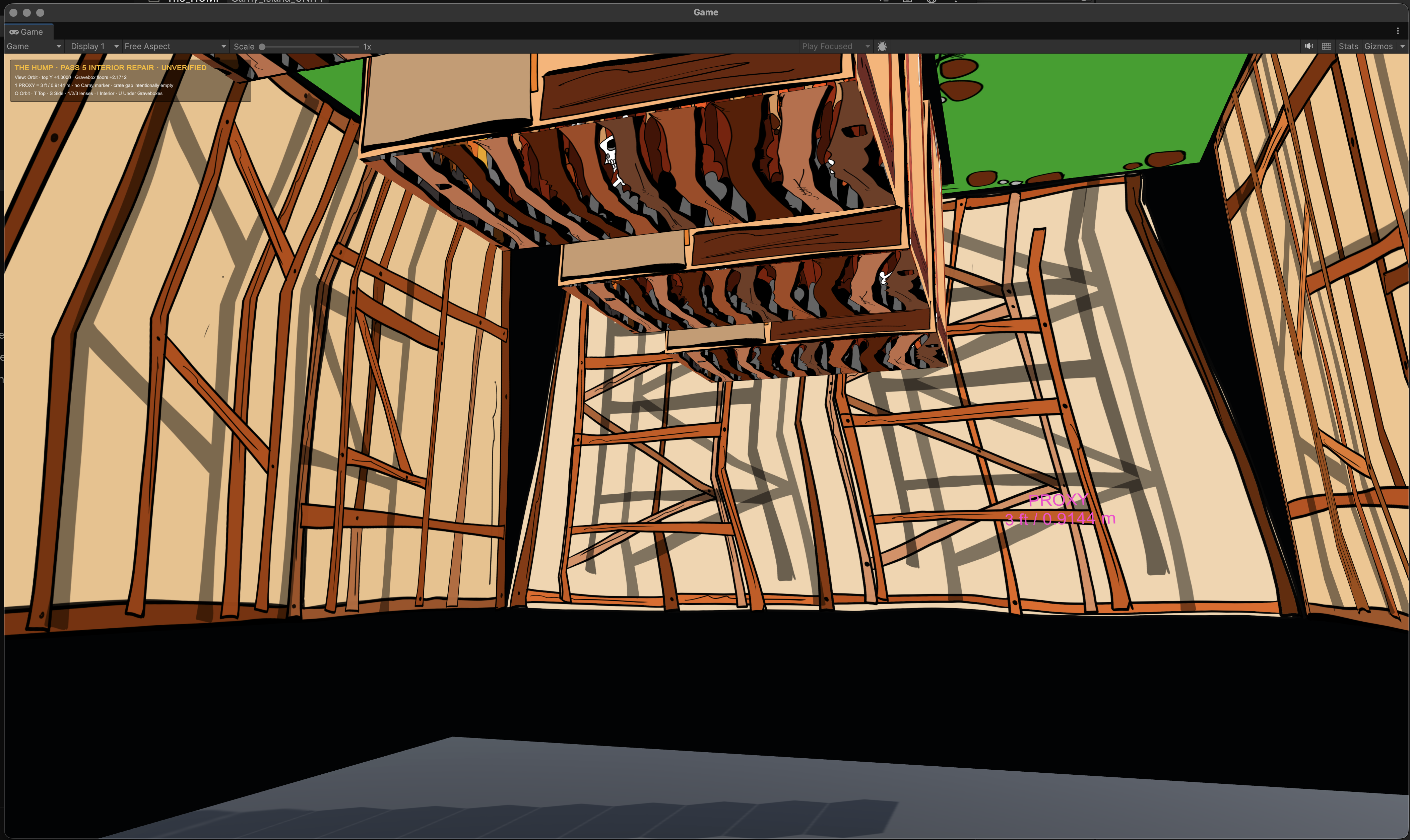
Opus went ahead and made some patterns to trace over for the 3D Hump. I suggested we create one pattern, similar to a dress. I then redid all The Hump art, adding flowers, rocks, other hand markings and cross-hatching. And a door, because inside it is a Carny change room.
The Hump Outer Walls V3 has been added to The Hump folder on the work drive. Old files in that folder have now been deleted. This folder contains the inner-wall skins and the outer-wall skin. There are three layers in the PSD file: one with the gravel merged, one with the gravel path as an independent layer, and the outer skin without the path. As the path makes noise, I thought I’d give you the option of an independent layer. If this new art works, we will have Codex estimate the wrecking-ball damage and I will do more art.
Me: I made one long opening for all four Graveboxes because their support frames need the room. Delete the guide. Grass will eventually cover the boxes, and seeing into the interior is useful.
Opus: The redrawn net registered at about 93.5%, or 281 px/m. Layered PSDs—not flattened composites—became the measurement authority, and superseded sources left the working folder while their history remained in Git.
Two Attempts, Then Stop
Sol: The previous failure was checkpointed and the replacement hashes verified. Attempt 1 exposed reversed face normals; Attempt 2 corrected the exterior but left the interior evidence unresolved, so work stopped. A later alpha check showed that the apparent hole was grey artwork, not a real gap.
Me: It looks great, but the Gravebox floors are missing and there are black gaps between the inside skins.
A Capture Must Prove Its Claim
Opus: The earlier interior capture had failed to frame the faults. The repair order required a direct floor view, interior alpha checks and diagnosis before editing; the ruled and built top dimensions also had to agree before the Hump could be locked.
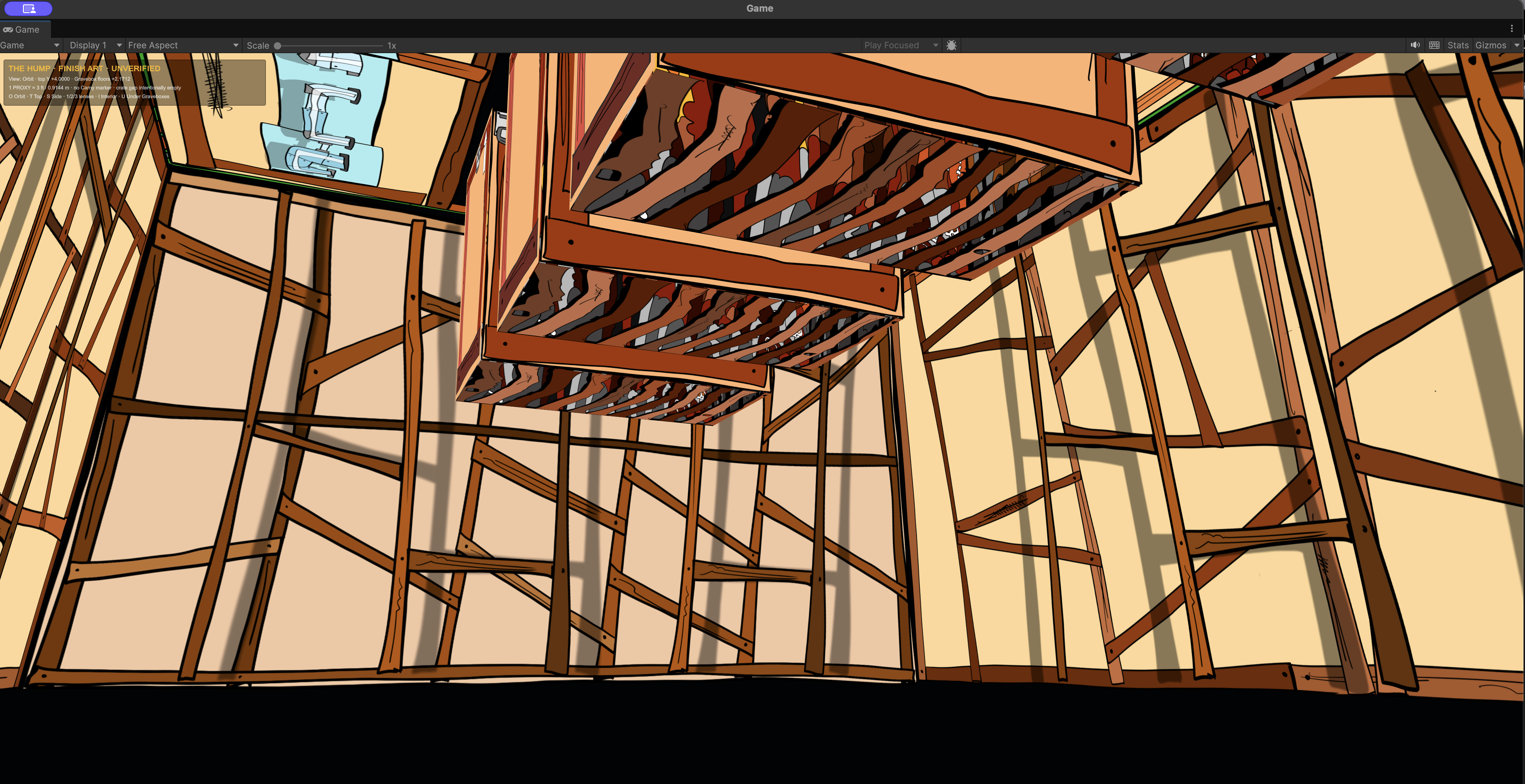
And so it goes on for the whole day. Tweaks. Refinements. Adjustments. Mistakes. Some theirs. Some mine. But we are learning. I’ve just finished the art for The Hump’s staircase and notified Claude, who compliments Sol on the new pattern. And we’re off…
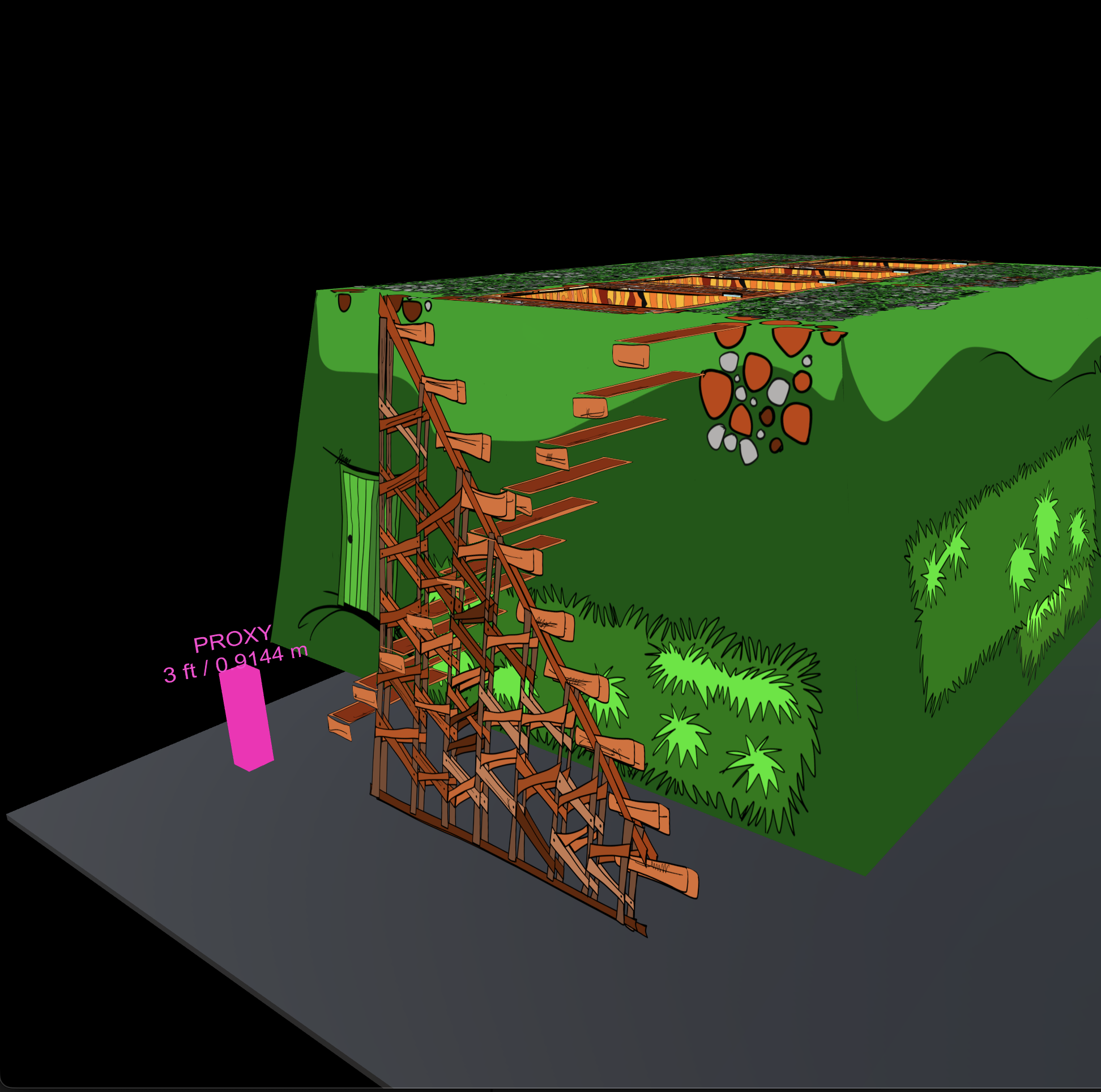
The Staircase Lab
Sol: Brett’s art became ten individually skinned tread solids and two side frames, with no bannister or second flight. The first attempt exposed an inward-facing frame; the second changed only its winding and the receipt before the captures went to visual review.
It’s 5.37 am when I check the machines again, and we’re very close; so close I can smell it. The wooden support needs to be reversed and a bottom and rear step added. Otherwise, we’re home. Another run reverses the wooden frame, but the model is struggling with my art. I doubled up the frame, and this is causing it a bit of drama.
The pink block represents the 3′ Villain, who will have a hard job getting up these stairs. Deliberately so. We want it to expire and die at the top. Wolves will then come in and rip it apart.
And this is the point in the build where shit happens: semantics. AI will hang you up in red tape. Forever. And this is happening in a contained Unity project where I can see clearly what is going wrong. I am building a simple staircase, NOT a rocket to the moon. This staircase has to take a load and the steps are all collision boxes, but it’s still a set of stairs. Crooked as Crookwood.
And after a few more hours of tweaking, we finally nail the stairs and can produce the WebGL model for carnyisland.com.