
The Villain Puppet
There is a three-foot person inside this suit. Drawing seventeen bones was the easy part; making them feel like one deceitful little person is the challenge.
Journal entry ↓The Villain Puppet — the visual story.
01 / 06
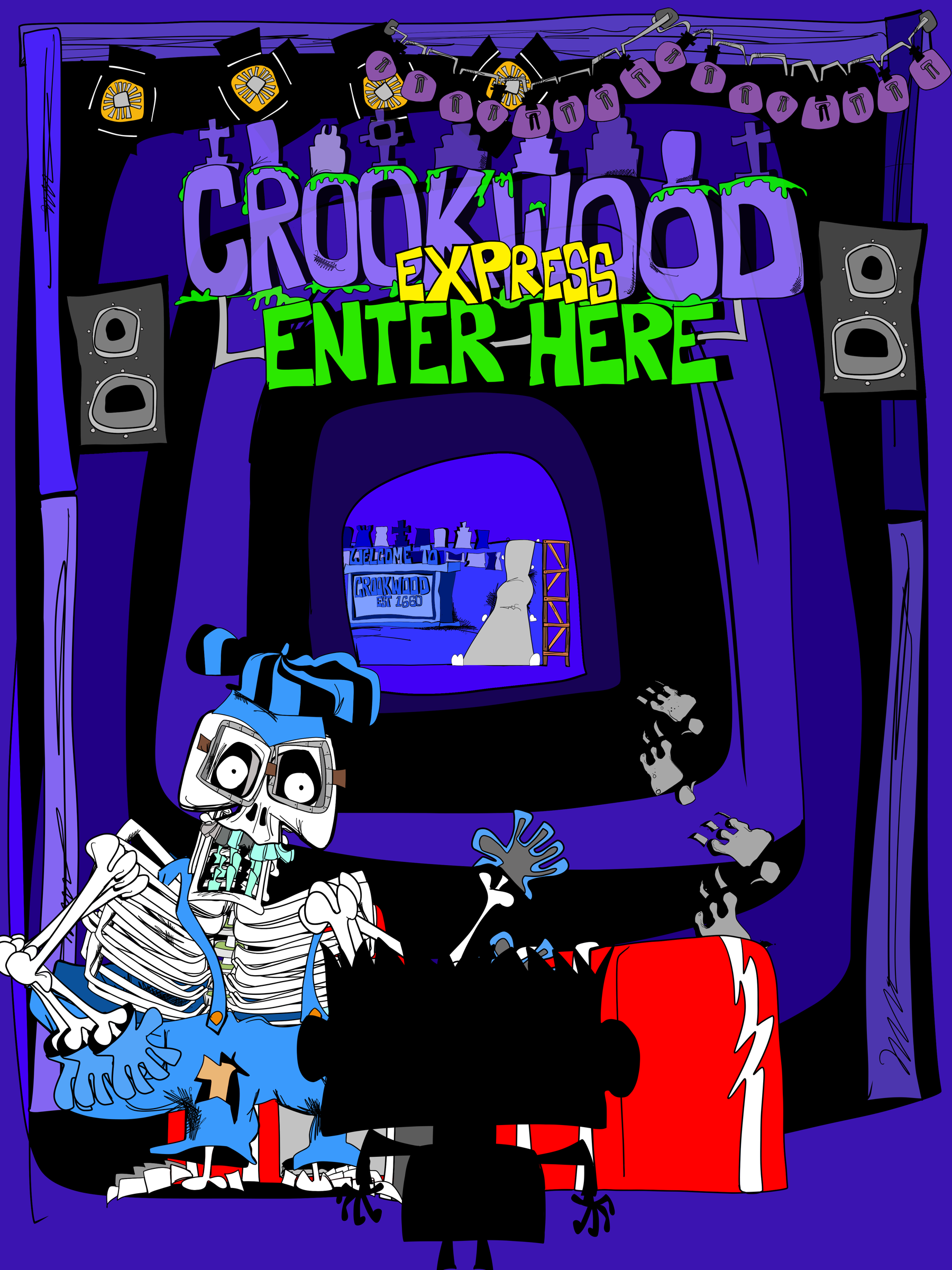
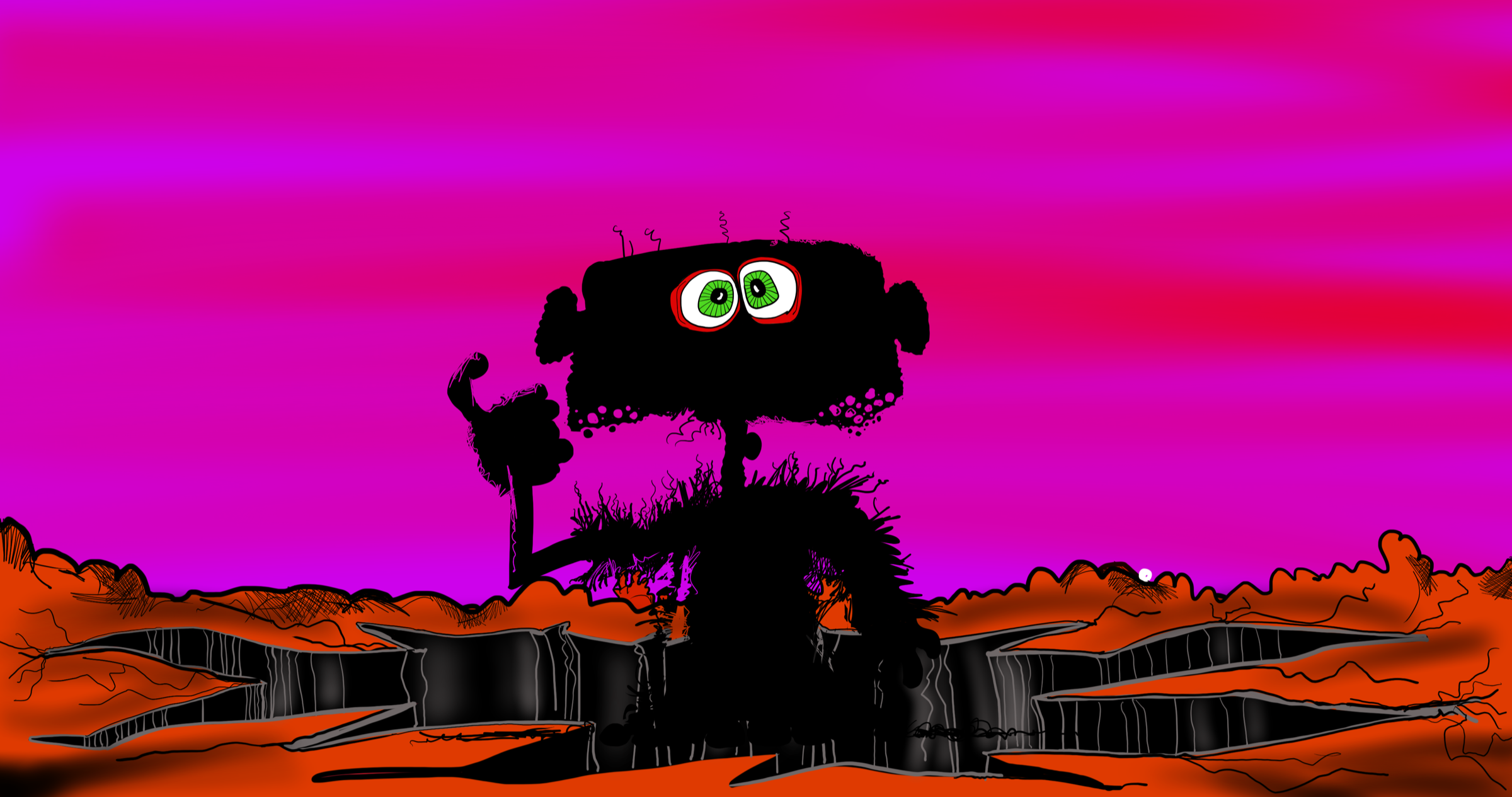
The Villain making an entrance. Original artwork by Brett Clements.
The player character
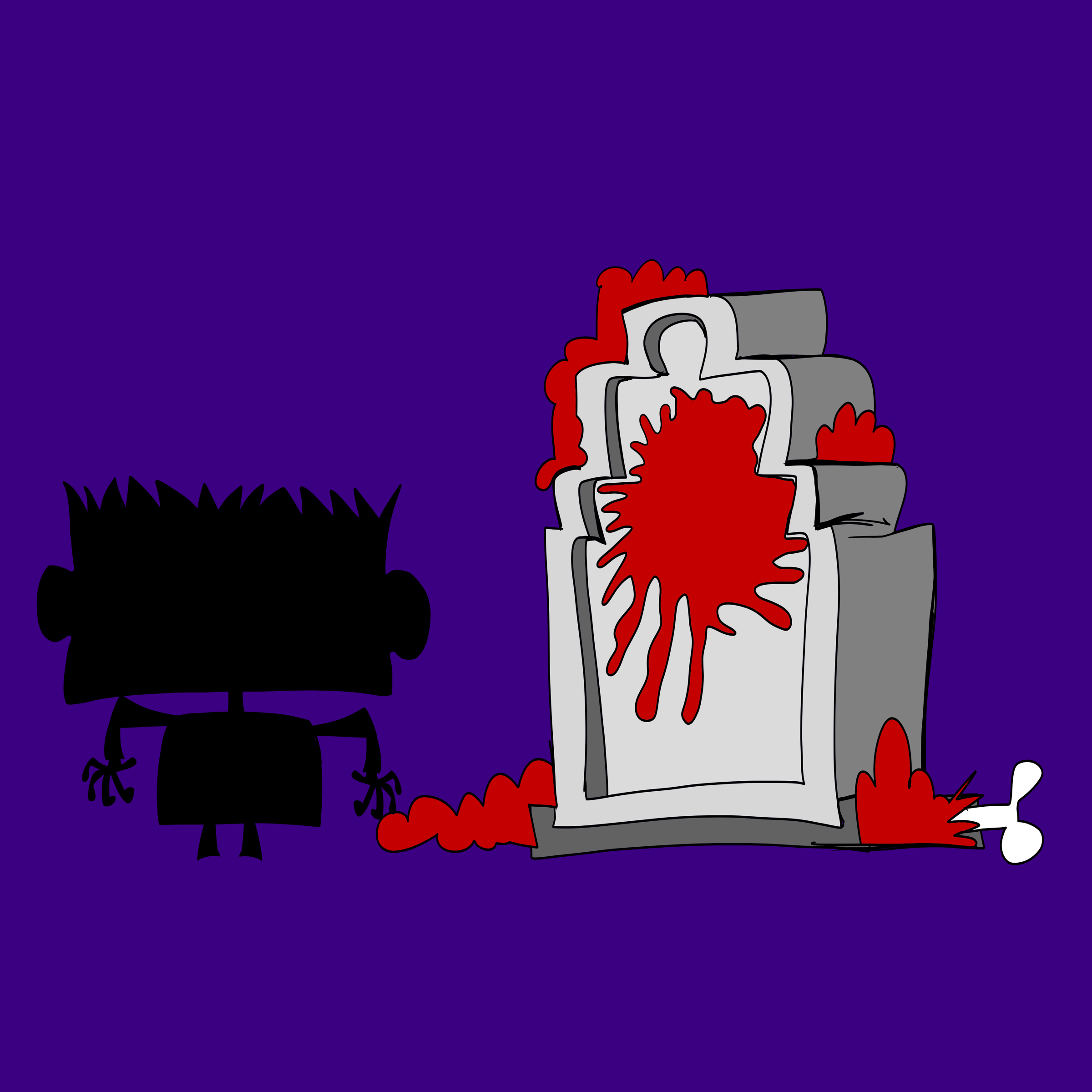
The most important piece in any video game is the player's character: its personality, how it moves and its mission. In Carny, the player's avatar is a three-foot-nothing pest—regarded by the game as vermin, a rodent that will stop at nothing to break into Crookwood, rob a grave and pinch body parts to build a monster. A Stein. A nod to Mary Shelley's classic Frankenstein. The Villain is a lot like Wile E. Coyote—not because Carny Island is anything like Road Runner, but because the Coyote never gave up. The Villain will go to Carny's supermarket, Gweedo's, and buy all manner of decoys and devices to breach Crookwood's defences. It has nine lives, so it just keeps coming back. I made the Villain three feet tall because, when it enters Crookwood, everything is bigger. Everything towers over it and looks formidable. When it stops to rob a grave, it is about the same size as the gravestone.
It could be anybody
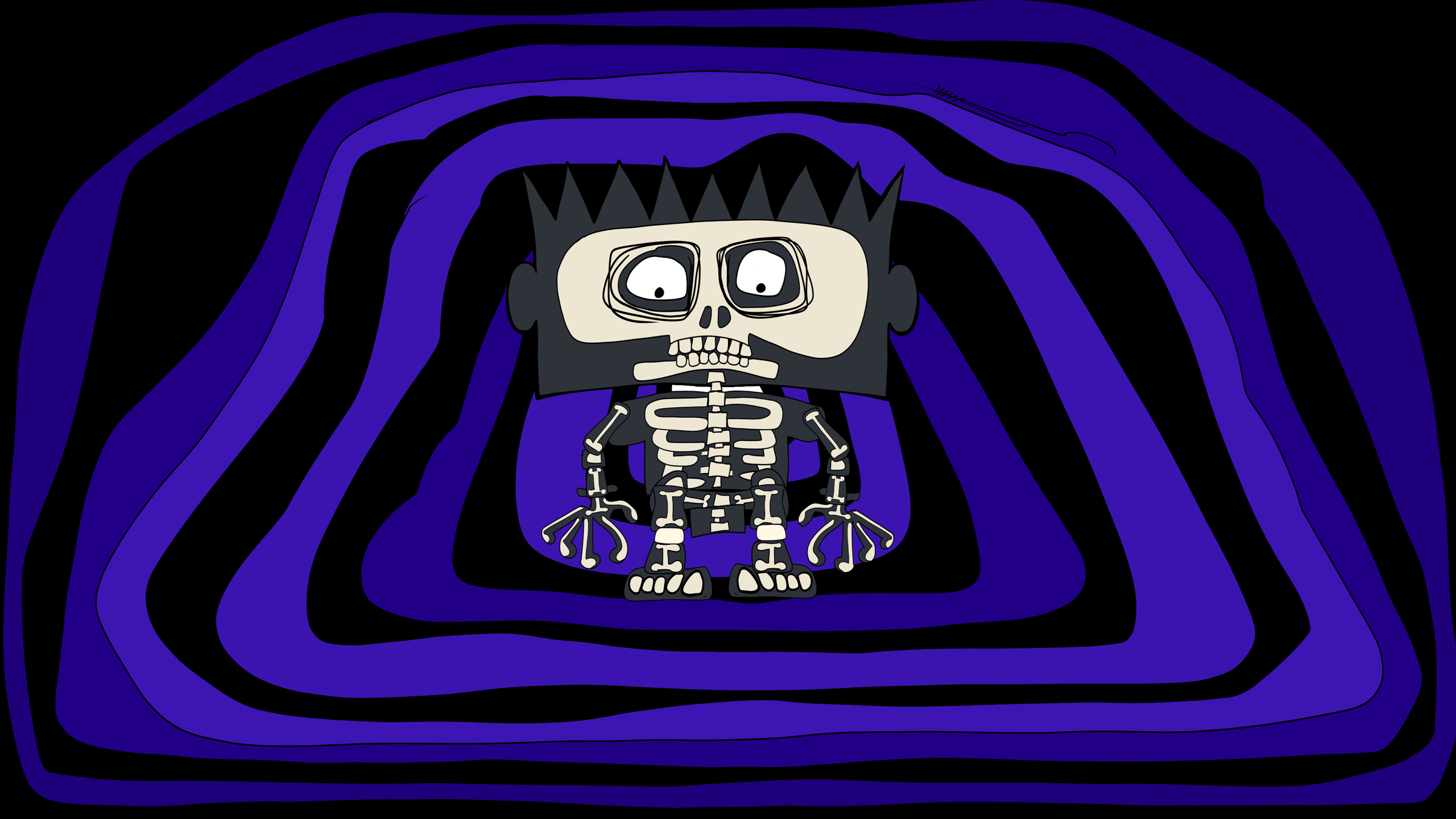
I originally envisaged the Villain as just a black silhouette. It could be any race, any age or any sex. I wanted the Villain to be an it, not a him or a her. The spiked hair gave me a strong, recognisable shadow. In many parts of the game, the Villain still presents as a shadow on the path. Under a full moon, the skeleton suit can become quite luminous. I already had Carnies—carnival workers, hence the game's name, Carny Island—wearing skeleton suits in the Ghost Train, so the disguise made sense: the Villain thinks it can blend in amongst "the boners", sneak undercover and do some damage. The Villain has no face as such—just eyes peering from the sockets and a mouthful of crooked teeth.
Seventeen bones
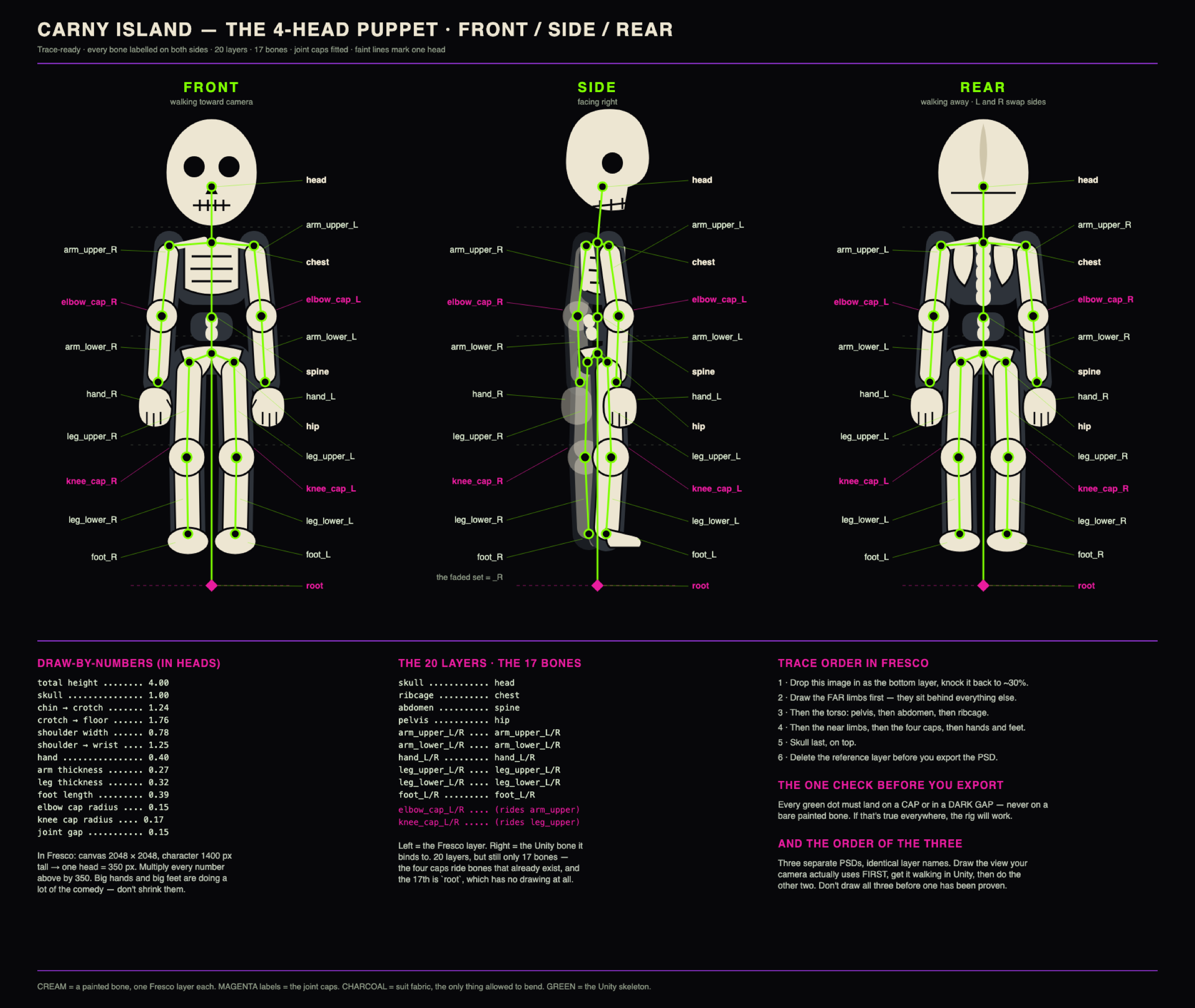
The first thing I asked AI to do was build me a reference sheet. Each layer had to be named correctly. AI cannot see my art or feel it. I have to find a way, with each drawing, to establish common ground so we can meet in the middle. I am more of a comic artist than an animator. Unity's 2D puppet uses a seventeen-bone skeleton. I had already been thinking about putting the Villain into a skeleton suit, so the technology and the character met in the middle. It killed two birds with one stone. I drew three key views of the skeleton suit: front, rear and side. Those views are used as the Villain changes direction. Then I drew another front, rear and side set for the Stein—the zombie monster the Villain begins to assemble from body parts stolen from graves.
Building a Stein
As the player collects parts, the seventeen bones are replaced by seventeen limbs, plus six vital organs and a set of eyeballs. From the front and rear, you can see the organs plumbed together with green tubes. Excess parts go into the shopping trolley on the left of the interface. The shopping trolley is like a bottomless pit. You just chuck limbs and body parts into it. Unfortunately, the more of the Stein you cobble together, the more blood trails you leave. In the snow, the cold may cauterise some of the bleeding. So you don't leave blood trails. As Carny Island is locked to NY weather, when you play is a tactic. Carny Island is always best played at night, on a cold night. Calling these monsters Steins is a nod to Mary Shelley. Frankenstein is one of the greatest horror masterpieces of all time: a monster cobbled together from parts stolen from graves and then animated.
It must feel like a person
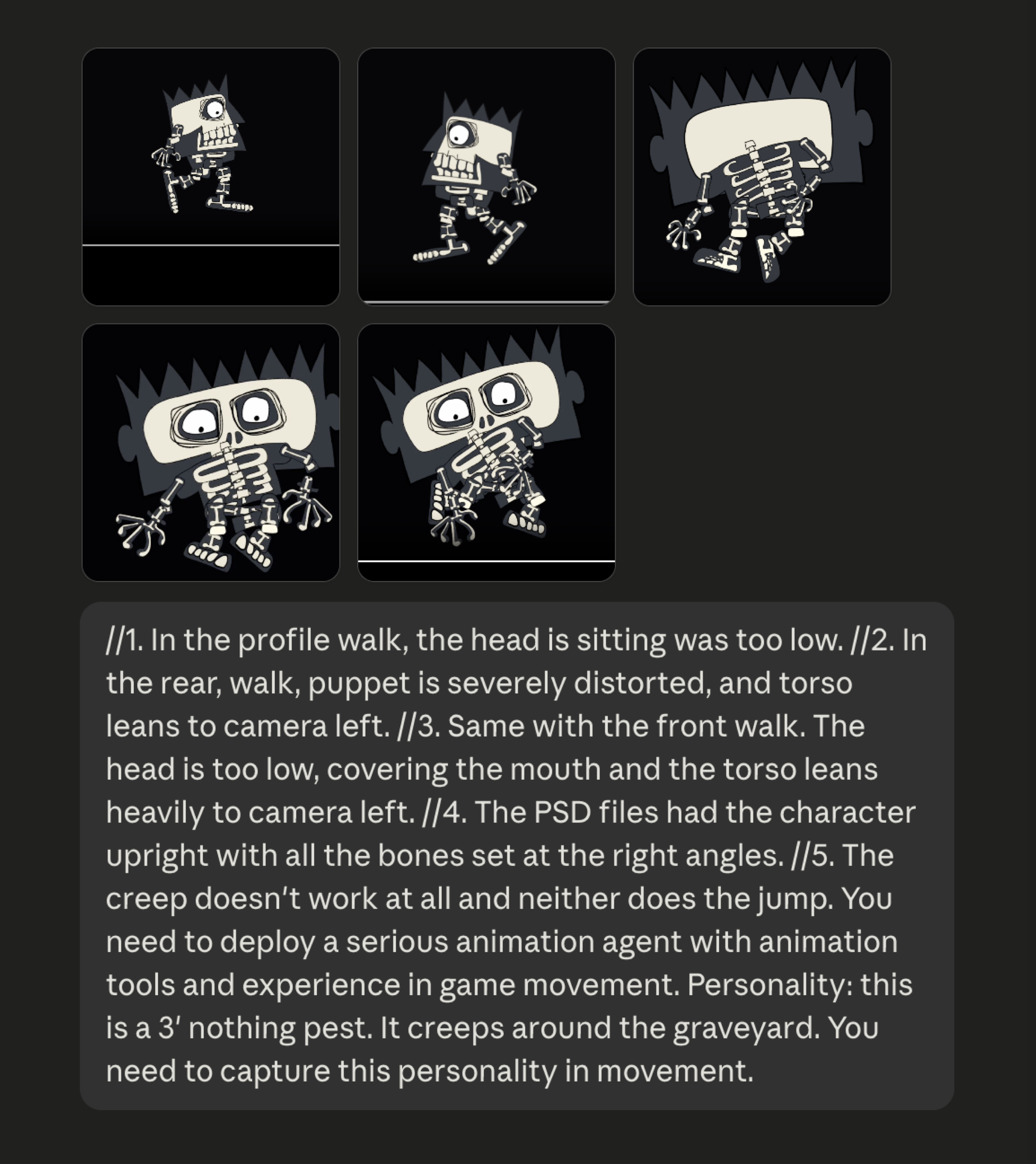
The most important thing is that the Villain has to be fun to move. I am still a long way from there. There is a lot of development work to do with the Villain's movement. The player's avatar must be extremely easy and enjoyable to control. When the Villain arrives at Crookwood, it comes through a tunnel where the player learns the movement. That fun is the first thing we must capture. The Villain is a sneaky little #ucker. The stealth and the joy of its deceitful nature have to come through in the movement. The closest walk we have made is still not right. It is too jerky. All the bones seem to move independently, as though they are not connected. It looks like a set of bones walking without personality.
The first test: a slow sneak
There is a three-foot person inside the suit. You will believe we have the movement right when it feels like that person is creeping along. Until we cross that line, it will be a puppet, not a person. The first acceptance test is the slow sneak. It happens in short bursts, with a brief pause between each burst. During the pause, the Villain is looking and listening.
Standing on the shoulders of giants
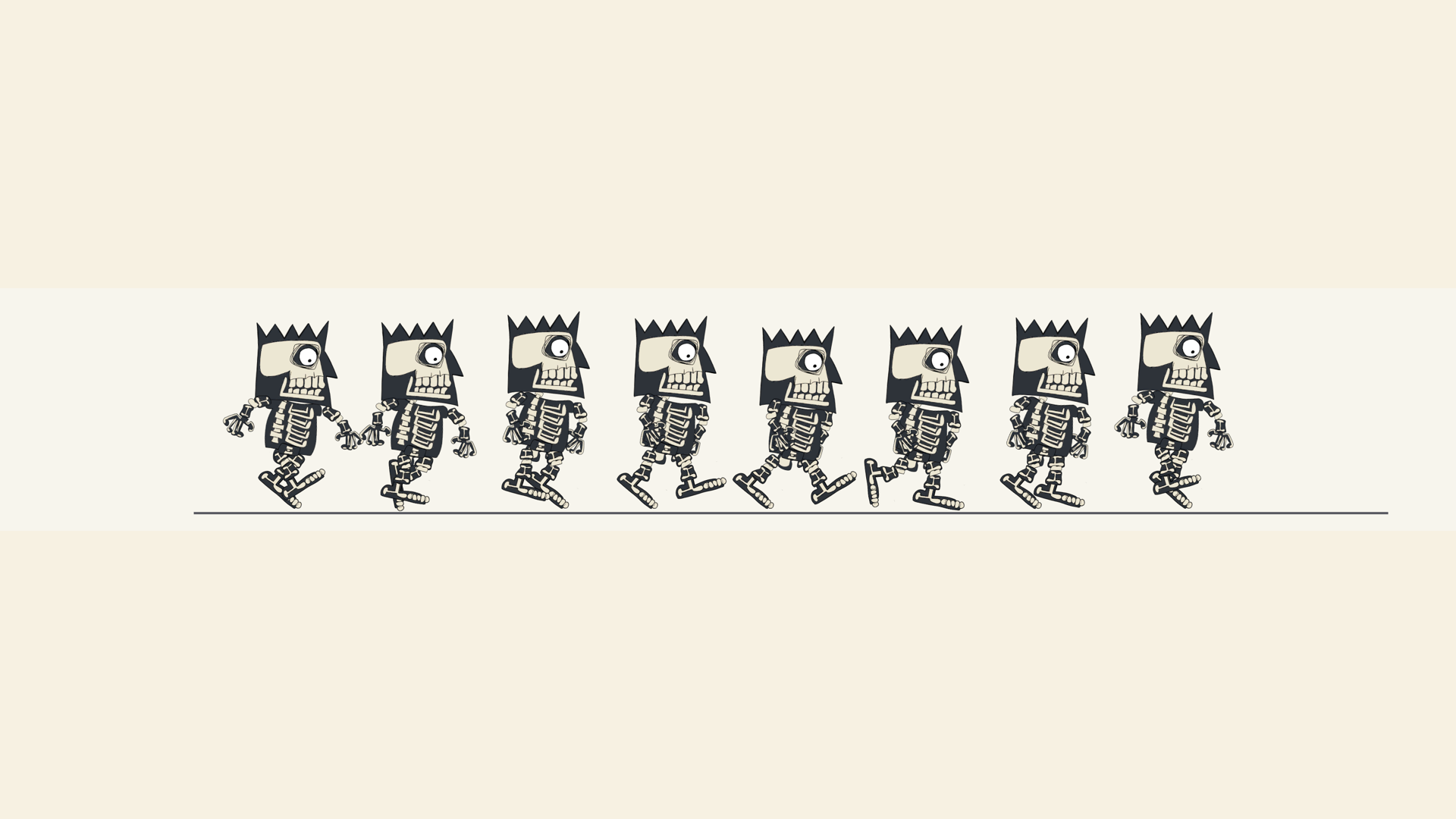
I used old walk-cycle and sneak-cycle sheets from Richard Williams' expanded edition of The Animator's Survival Kit. Williams was the director of animation on Who Framed Roger Rabbit, and his book is a manual of animation methods, principles and formulas. When I was a kid, I saw how Mickey Mouse was animated and copied those cycles. I was never very good at hands and feet, but those methods have been extremely helpful in posing characters. There is something wonderfully ironic about animation guides developed through the 1930s, 1940s and 1950s now being used to brief frontier AI models in the 2020s. The Ken Harris slow-sneak drawing is a guide to weight, intention and timing; it is not artwork for us to reproduce in DINER. Our publishable artwork is my own Villain pose sheet. We all stand on the shoulders of giants.
Beyond persistence
Everything still feels wrong at the moment. I have the Villain walking on tiptoes and piano tinkling underneath, but I have a long way to go. This is not just mathematics. It is creativity, art, humour and cascading events turned into a game. AI does not sleep. It goes beyond persistence. Even the most persistent human will eventually become tired, broke or starved. AI will not give up. Ever. That is a quality beyond persistence. But the human still has to know where the work is going. When the screen is wrong—or when it simply does not feel right—you stop, regroup, begin a new conversation or let one machine brief another. If you do not know where you are going, it becomes the blind leading the blind.
Knowing where you are going
I know exactly what Carny Island needs to look and feel like. I might not know the mathematics required to fire a pig into space, but AI can calculate the pig's weight and the rockets required to reach the trajectory. AI did not invent the pig strapped to a rocket. I invented that. When it comes to building a game in Unity, I do not know what I am doing. I know the game, its look, its gameplay and how every system works, but I do not know how to build those systems. I can drive, but I cannot build an engine. I know how to drive to Melbourne, but I do not know the millions of interactions between the vehicle's parts that will get me there.
Everything has been drawn
What I do have is thousands of illustrations, thousands of layers, tens of thousands of words and more than 2,000 animated videos. I have game-played the systems by animating them: graves being robbed, weapons being used and rocket witches using bomb sights. Everything in Carny Island has been drawn. It just has not all been built. When it is built, if it does not work as I imagined, we redo it. I want DINER to share that journey honestly: the traditional skills, the unfamiliar tools, the mistakes, the dead ends and the progress. Claude contributes. Codex contributes. AI helps build. But a human still makes the art.